
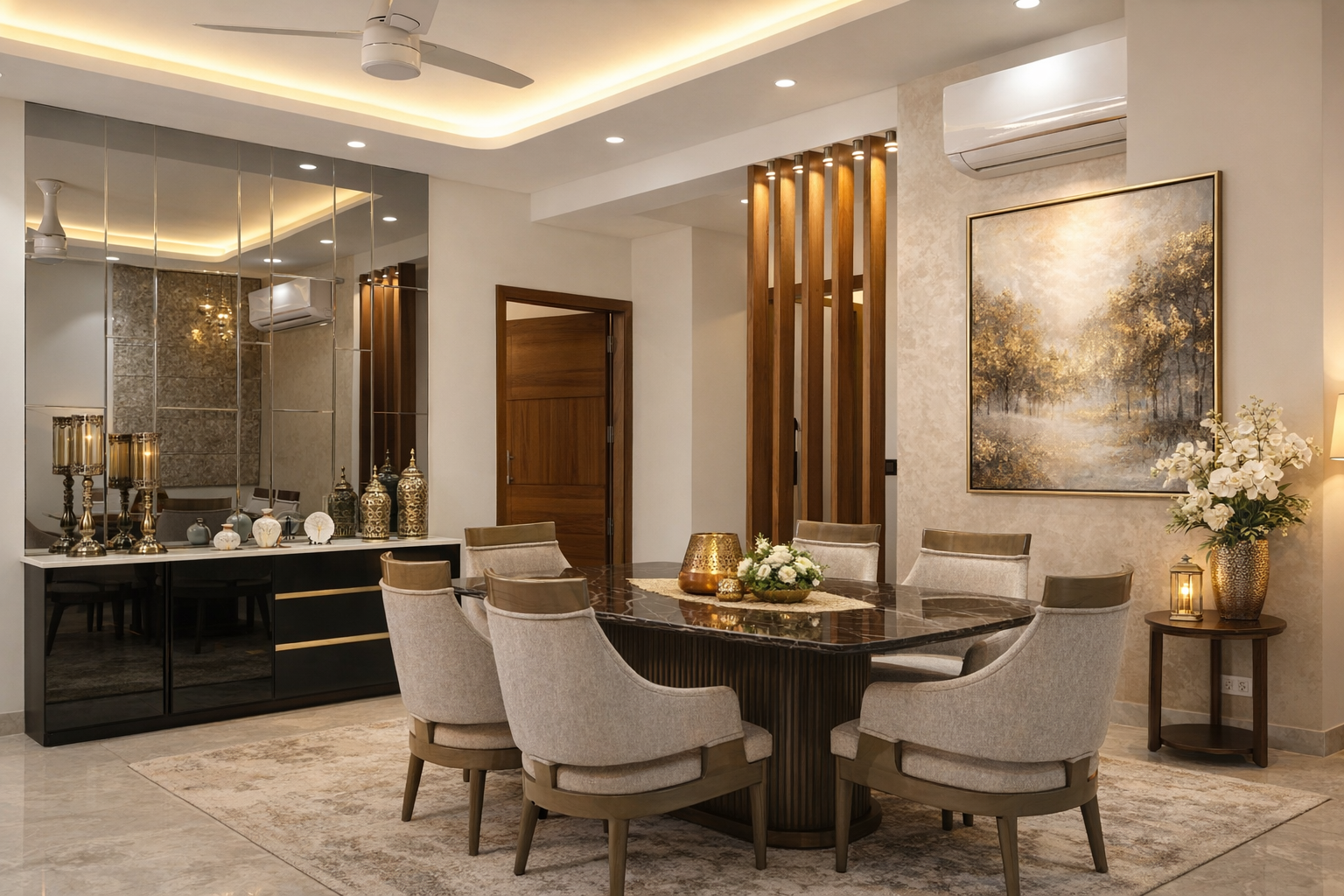
Why Most Indian Homes Feel Busy Even When They’re Beautiful
Your home can look perfect. And still feel exhausting.
This is one of the most common things we hear from Indian homeowners — especially in urban homes.
The Real Problem Isn’t Space. It’s Overlap.
Modern Indian homes are trying to do too much in the same area.
The living room is:
- A family hangout
- A work-from-home zone
- A guest reception area
- A TV lounge
- Sometimes even a kids’ play zone
Nothing has a clear identity. So the mind never rests.
Why This Happens
Most homes are designed around furniture layouts, not daily life.
Designers ask:
- Sofa size?
- TV wall style?
- Finish preferences?
But rarely ask:
- Where do you decompress?
- Where do you work without interruption?
- Where does the house slow down in the evening?
Without these answers, even luxury homes feel cluttered — mentally.
Conscious Design Starts With Separation, Not Size
You don’t need more square footage.
You need better zoning.
Even subtle shifts make a difference:
- Visual separation between work and leisure
- Quiet corners that aren’t multifunctional
- Furniture placement that creates pause, not pressure
When spaces have purpose, the home feels calmer automatically.
What Changes When Zoning Is Done Right
- Focus improves
- Family time feels more natural
- Visual fatigue reduces
- The home supports your rhythm instead of fighting it
That’s conscious living in practice.
Key Takeaway
A home doesn’t need to be minimal to feel peaceful.
It needs clarity.
And clarity comes from design that understands how Indian families actually live.

 Upper Ground Floor, Ascott Ireo City Central, Sector 59, Gurugram, Haryana

